Stellantis is preparing driverless cars in France with NVIDIA
Announced October 23 with government backing, the project combines Stellantis vehicles, driving AI from UK-based Wayve and NVIDIA chips. No city or number of vehicles has been given yet.
Translated from French by AI. The original French article is the reference version.
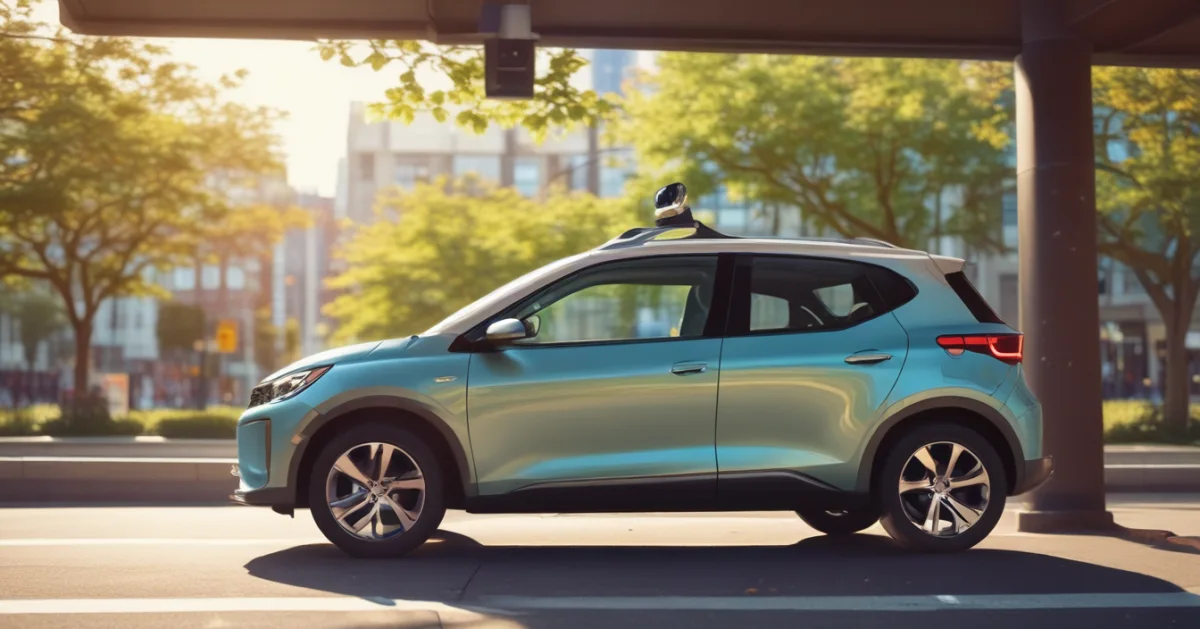
The setting was the Assises du véhicule autonome (France's autonomous vehicle conference) in Paris on October 23. The announcement fits in one sentence: Stellantis, British start-up Wayve and NVIDIA will work with the French government to put driverless cars on the road in France, then speed up their arrival in the rest of the European Union. Uber would also be involved, according to the Journal de l'Automobile, which cites Stellantis.
What the announcement leaves out matters just as much. No launch date, no fleet size and no city was given. According to The Next Web and the Journal de l'Automobile, local partners will operate the vehicles and must first consult unions, local authorities and mobility stakeholders.
Who does what in the car?
Stellantis provides vehicles designed for Level 4 autonomy, where the car drives itself, without human supervision, within a defined area. Wayve supplies the artificial driver, its AI Driver software. NVIDIA supplies the onboard computer and sensors (its Hyperion platform) as well as its Halos OS operating system. Uber would provide its booking network.
Wayve's method is the core of the bet. According to the Journal de l'Automobile, its software relies on "end-to-end" deep learning: a single neural network goes from sensor images to driving decisions, with no high-definition maps or hand-coded rules. The stated benefit is the ability to drive in a new city without mapping it beforehand. Wayve says it has tested its technology in 500 cities. In London, where it has offered rides with Uber since September, still with a safety driver on board, it claims about 140,000 registered users. These figures come from the company and have not been independently verified.
What the state is promising
Transport Minister Philippe Tabarot said France would adapt its rules to speed up the arrival of autonomous vehicles, "while maintaining strict requirements for safety and data sovereignty." No text has been announced yet. The European framework remains restrictive: according to The Next Web, the only approval route for fully autonomous cars is capped at 1,500 vehicles per year. The sources do not say how that cap would apply to the project.
Sovereignty has come up in every speech. Stellantis wants to make France "one of Europe's leading hubs for AI-based mobility." Nourie Boraie, Wayve's head of public affairs for Europe, speaks of a "sovereign AI solution." Yet the software is British and the hardware is American.
A lag nobody is hiding
"China and the United States are really ahead," acknowledges Anne-Laure Vincke, head of innovation at Stellantis, quoted by the Journal de l'Automobile. Europe still has few driverless rides: the first fully driverless ones are in Zagreb, using software from China's Pony.ai, according to The Next Web. In early October in Turin, Stellantis and Wayve showed a Fiat 500e and a Maserati Grecale driving hands-free, a supervised driver-assistance feature scheduled for launch in 2028, first in North America.
For a local authority or a transport operator, the announcement therefore opens nothing immediate, but it sets a political timeline. Two things are worth watching: the regulatory text promised by the minister, and the name of the first candidate city.
Method: AI-assisted monitoring, verified sources, article reviewed and approved by Frédéric LENQUETTE. Our editorial policy.
Share this article