Google tests its AI chips in orbit, but the satellite can power only one at a time
Launched on October 1, the Project Suncatcher prototype sent back a haiku written by the Gemma 4 AI model. Here is what the test really shows, and why space-based data centers remain a distant prospect.
Translated from French by AI. The original French article is the reference version.
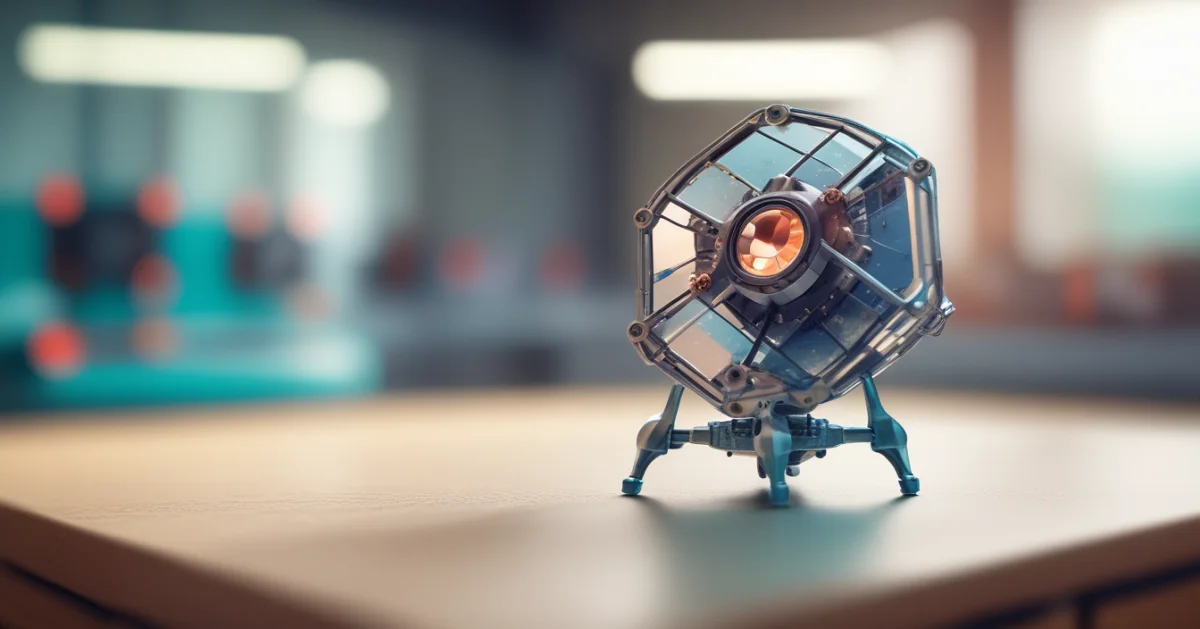
The satellite is passing over Svalbard, Norway, when the response reaches the ground. Three lines: “Blue marble below / Data streams in silent grace / Starlight feeds my core.” On October 30, Google announced that the prototype of its Project Suncatcher had sent back its first AI response from orbit: a haiku about life in space, written by Gemma 4, its open AI model, running on board.
Google calls it the “very first AI response from a data center-class TPU in orbit.” TPUs are the AI chips Google designs for its own data centers. The wording is precise: it refers to these specific chips, not to the first AI ever to run in space. The satellite was launched on October 1 by a SpaceX Falcon 9 rocket, along with more than a hundred other spacecraft. It was built with the company Planet.
Why send AI chips into space?
Google unveiled Suncatcher in November 2025 as a long-term research project. The idea: power clusters of TPU-equipped satellites with solar energy, which is nearly constant in orbit, instead of plugging ever more power-hungry data centers into the electrical grid. The topic is pressing: on Earth, electricity is becoming a bottleneck, as with this data center planned for Microsoft in England.
In recent weeks, the team powered up the compute trays and ran first machine learning tests. After the haiku, Google says it had the satellite write space limericks and asked it to describe the state of its own systems. According to a Google spokesperson quoted by TechCrunch, the satellite is operating normally.
One chip out of four, twenty minutes at a time
Google’s post gives no technical figures. TechCrunch provides a few that put the feat in perspective. The satellite carries four TPUs, but it produces at most 1 kilowatt of electricity. Only one chip can therefore run at a time, and for only about twenty minutes in a row. These limits also complicate communications with the ground.
The essential still has to be proven. Upcoming tests will measure how the chips withstand heat and space radiation. Radiation can flip bits in memory and corrupt data without the usual monitoring tools noticing. According to TechCrunch, ground tests suggested a small effect on running a model, but a larger one on training it. Orbit must confirm this.
Profitability, not before the 2030s
Google plans to launch two satellites linked by laser in 2027. They will need to show that a single computation can be split across several spacecraft. Other players, such as Starcloud or Cowboy Space, are instead aiming for isolated computations on each satellite.
That leaves the project’s economics. Google hopes for profitable systems in the 2030s. That would require Starship, SpaceX’s giant rocket, to become fully and rapidly reusable. According to TechCrunch, an analysis linked to Suncatcher estimates that about 1,800 Starship flights would be needed to bring costs down as far as previous launchers did. Alphabet, Google’s parent company, also holds a significant stake in SpaceX. The haiku is a good start, but it does not yet prove that an orbital data center could ever be profitable.
Method: AI-assisted monitoring, facts verified by a second AI model, article published automatically then reviewed and approved by Frédéric LENQUETTE on November 12, 2026. Our editorial policy.
Share this article